
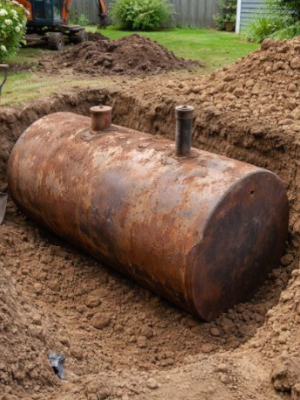
Both heating oil and propane tanks can be installed underground. However, there are quite a few major differences between these underground tanks. If you’ve got an underground heating oil tank, then you’re likely being advised to remove it. However, sometimes you might be advised to install your propane tank underground. But why is that? There are important things to know, and I’ll be covering all of that here.
Underground Heating Oil Tanks
Underground heating oil tanks started popping up in the 1930s. At the time, they were installed underground for convenience and to save space. However, over time, these tanks became known as environmental hazards. Over time, these tanks began to rust and corrode. This started to cause these tanks to fail, resulting in oil spills and leaks. After the 1970s, these tanks no longer became commonly installed. Some states, such as California and New Jersey, have effectively banned the installation of these tanks! However, other states, such as Connecticut and New York, have very strict restrictions and mandates if you want to install an underground tank.
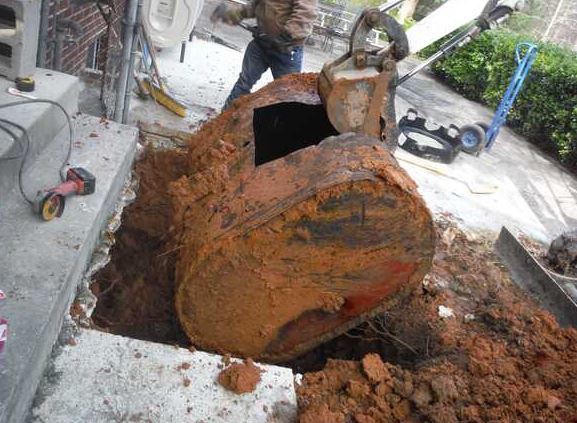
Nowadays, underground heating oil tanks are strongly encouraged to be removed! Especially if they’re older than 30 years old! Tanks of that age will be susceptible to failing, which will lead to thousands of dollars in environmental damage! Some insurance companies might restrict coverage for homes with these tanks because of the liability. You might also have a difficult time getting a mortgage on the home for the same reasons.
Removing or Decommissioning Underground Oil Tanks
If you have an underground heating oil tank, then you should absolutely get it either removed or decommissioned. This will ensure that the tank is no longer a threat to the property or the environment around your home.
Getting the tank removed is an expensive process. This requires a licensed and insured tank removal company to come out to your home and remove the tank for you. They will start by digging in the location where the tank is until they’ve reached it. Once they’ve reached the tank, they will check to see if there’s oil in it. If there’s oil in the tank, they’ll drain it. Otherwise, they will remove the tank. While there’s no exact price point, the removal can cost several thousand dollars. In rare cases of environmental damage, you could see it costing much more!
Alternatively, you can get the tank decommissioned. This is a much cheaper option and often will require filling the tank with a stagnant material such as gravel or sand. The tank must first be cleared of any oil or sludge in the tank to prevent any potential tank malfunctions. Then, the tank is filled with gravel or sand. This will tend to cost anywhere between $1,500 and $3,500.
Underground Propane Tanks
Now, underground propane tanks are much different than underground heating oil tanks. Firstly, there are specific tanks for underground installations. Underground propane tanks are designed to be more heavy-duty than above-ground propane tanks. They’re just as safe to use as well! But to do this, you must own your propane tank. Most propane dealers require that you have your tank installed above ground if you’re renting it. But if you own the tank, you can install it where you wish!
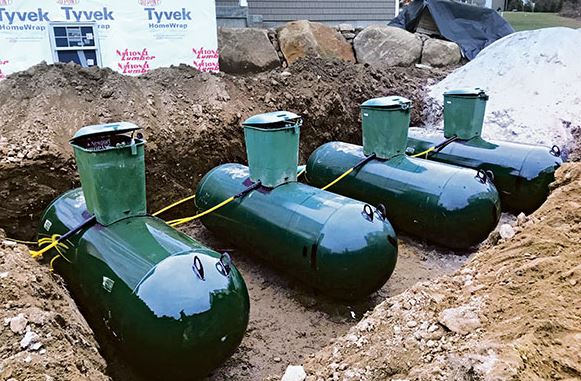
Unlike underground heating oil tanks, underground propane tanks are not considered environmental hazards. This is often because they have not only a protective coating on the tank, but propane is a gas. So if there was a leak, it would not cause damage to the soil or water nearby! But similarly to an underground oil tank, they have a 20-30 year lifespan. That being said, it’s also crucial that these tanks are properly maintained to prevent cracks and leaks. Anode testing is a way that propane technicians test the tank to ensure that it isn’t corroding.
Safe Propane Tank Installation
While underground propane tanks are generally safer than underground heating oil tanks, they still must adhere to the propane tank installation requirements. Like all propane tanks, these tanks must be installed at least ten feet away from the home and away from the driveway or vehicle traffic. Doing so will ensure the safest location for the tank’s installation.
Now, specifically for underground propane tanks, these tanks should be away from any tree roots and shouldn’t be installed near roots. Roots can sometimes scratch the exterior coating of the tank, which could result in faster wear and tear of the tank. In other concerns, sometimes roots can damage or even pierce the tank!
What’s the Verdict?
There’s a stark difference between an underground tank for heating oil and a propane tank. Propane tanks tend to be much safer to use underground than heating oil tanks.
Underground heating oil tanks should be removed ASAP, and you should avoid installing a new one. Especially if your tank is 30 years or older! Depending on which state you live in, it might be outright banned! These tanks can become environmental hazards over a long period of time. Filling these tanks with gravel or sand is another great way to prevent them from becoming problems if you don’t wish to remove them.
Underground propane tanks are a bit safer to use. However, they must be properly maintained over the course of their 30-year lifespan. Properly maintained propane tanks will last a while! Just make sure you follow the guidelines for their installation and ensure that these tanks are safe to be installed and used!
Happy Heating!
Hunter