Preparing Yourself for Heating Oil Season

If you’ve watched Game of Thrones, you’ll know the iconic phrase “Winter is Coming”. Well, it’s August now, which means Heating Oil Season and Winter are just around the corner! Just like in the show, it’s important to understand that in the Northeast, it’s bad not to be prepared for what’s to come. Winter is peak season for heating oil, and now that it’s August, there’s a lot for you to do before winter is in full swing! Like every winter, you shouldn’t go in unprepared!

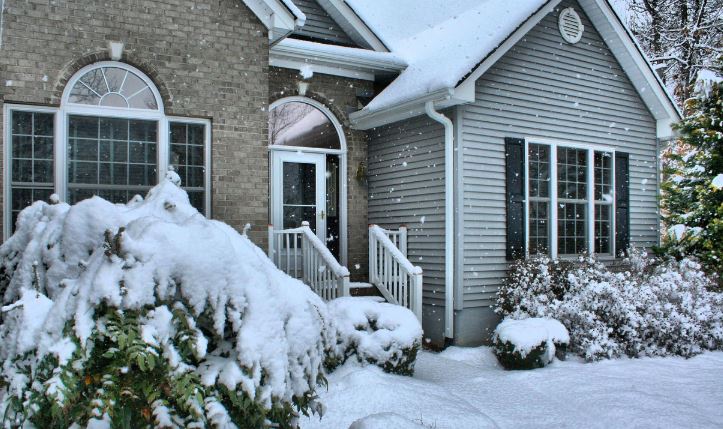
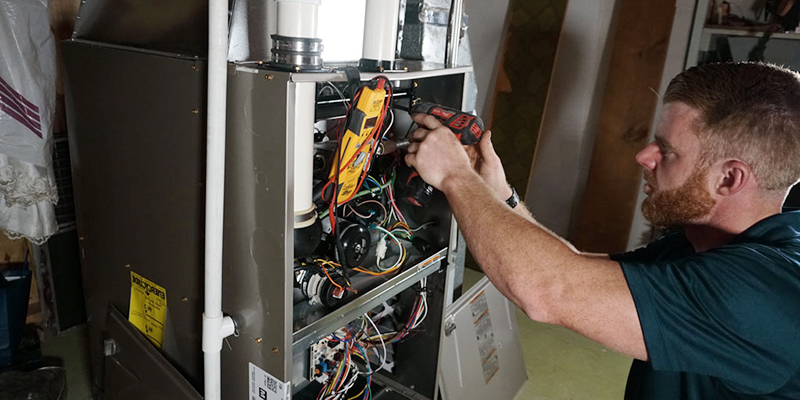
Fall and Winter are just around the corner! Which means soon your home will look like this!

Changing Out Your Air Filters

Forced air is an increasingly popular form of heating. If you use this, then now is the best time for you to change out your air filters. Ideally, these should be changed out every couple of months! However, if you have pets, then these should be changed out more frequently! But during the summer months, especially, they’ll get much dirtier. This is often due to collecting allergens, pet hair, dust, and dander! Changing out these filters is crucial to maintaining a healthy home, especially if you live with people who have allergies!

However, what’s the process for changing them? If you follow the steps below, you’ll understand exactly what you have to do to replace them!

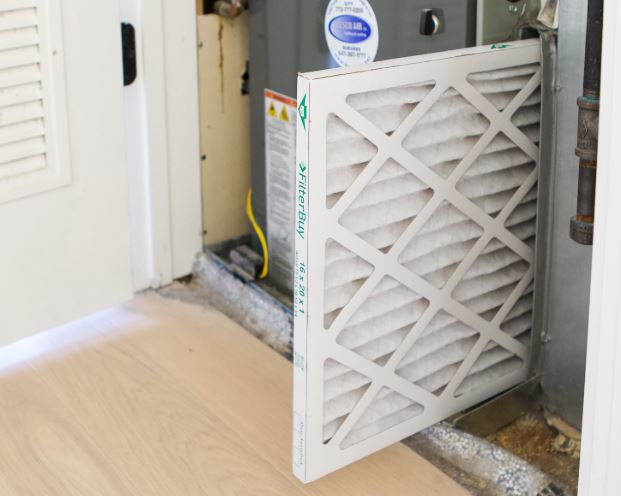
  1. The first thing you should do is turn off the furnace. This is crucial because your furnace might turn on if you’re changing out the filters! You don’t want that to happen!
  2. Then, you’ll want to remove the side door to the furnace to access the filters. After doing this, snap a quick picture of how they’re installed currently. This will help you make sure the new ones are installed correctly after you’ve taken the old filters out!
  3. Find out what size your filters are. If you haven’t done this before or are unsure as to what size filters you have, you’ll want to get this information. The most common size for these filters is 25x20x1. But if you don’t have any replacements, you can stop by the hardware store and pick up some.
  4. Once you have the replacement filters, you’ll need to replace them! The replacements should have arrows showing how they’re installed. Follow those so you can install them properly!
  5. You’re all set! Just close up the furnace door and turn it back on!
Changing out your filters is pretty easy! Just make sure you turn off your furnace when you do it!

Gathering Firewood

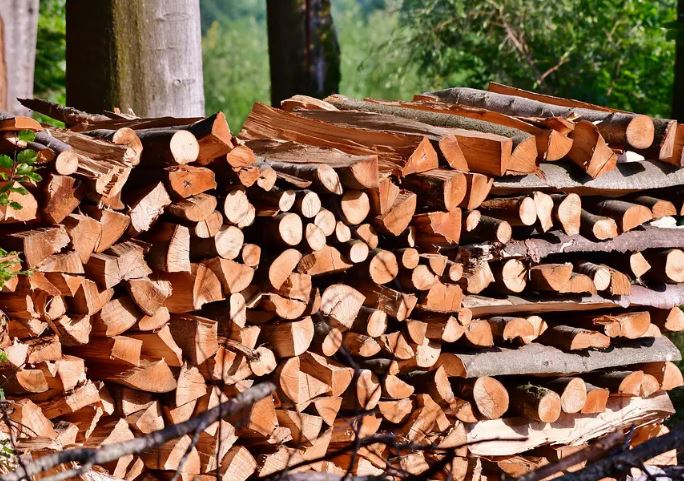
If you’ve got a fireplace or wood-burning stove at home, then you might know that you have to gather firewood. My family and I have a wood-burning stove, so typically we start to gather firewood around May-June. The earlier you gather it, the better, because it gives the wood time to try out before you burn it! But if you start stocking up now, then you’re still on the right track! Sometimes the cold weather doesn’t start until late September, early October anyway!

If you don’t have a lot of time to gather firewood on your own, then buying pre-cut wood is an option! However, it tends to be a little bit more expensive. You’ll be able to find them at places such as Home Depot, Lowe’s, Tractor Supply, and even some gas stations! But if you’re like my family and have been doing this for a while, you’ll have a log splitter! This speeds up the process of cutting up wood! Rather than relying on an axe. These machines streamline the process!

But if you have the time, gathering and splitting your own wood will save you so much money! Some woods, however, will tend to burn better than others. Oak, for example, is the most popular for burning. It’s not messy, and it takes some time to burn. However, pine is very sappy and can take a bit longer to dry out. Birch, on the other hand, burns quickly, and it doesn’t last very long. However, this makes it an excellent fire starter!

Stocking up on firewood is a great way to prepare your furnace and wood burning stove for the long winter ahead! This’ll also lower your heating oil usage if you have both!

Heating Oil Tank Inspection

As the years go by, your heating oil tank will get older. This often makes it susceptible to general aging over time. The tank itself will experience wear and tear as it gets older. For this reason, regular tank inspections are important for your tank. While this process doesn’t take a long time, it’s crucial for your system’s functionality and your safety.

In this section, I’ll be covering a brief explanation of what’s involved in a tank inspection. But if you want a more in-depth explanation, check out this article here.

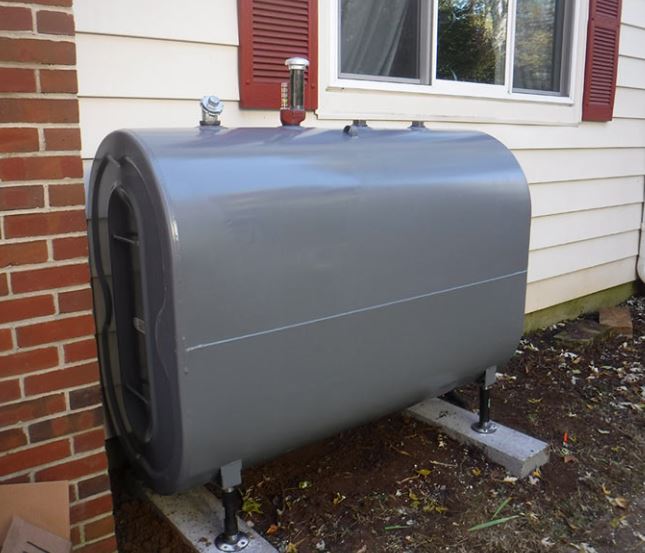
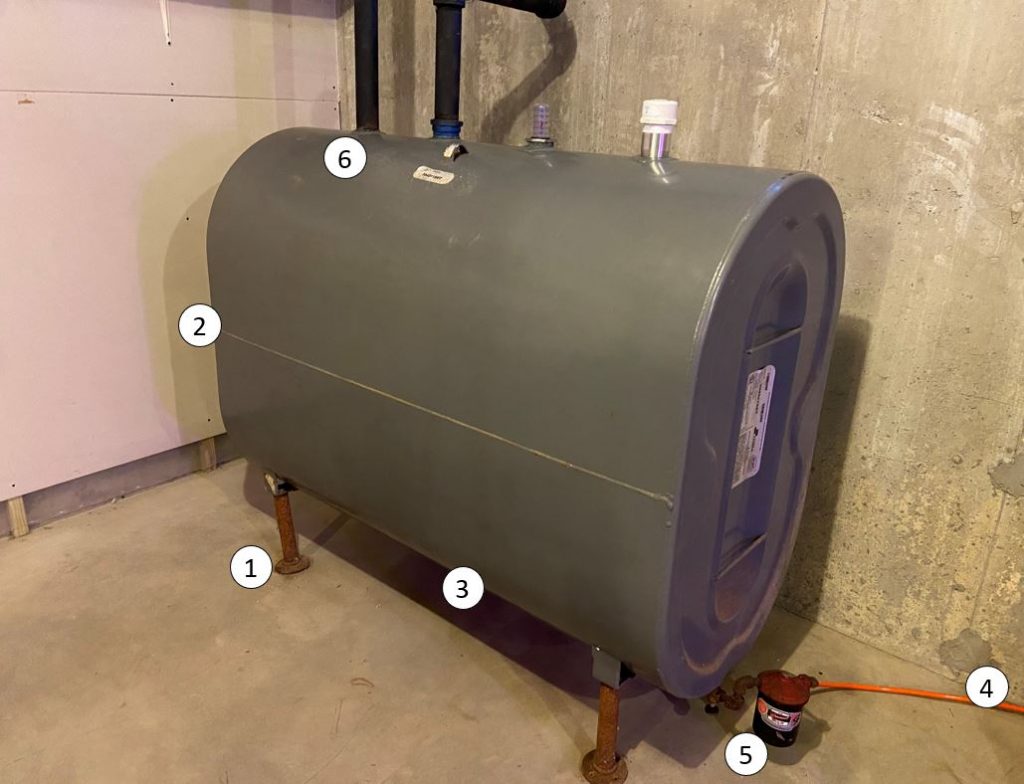
  1. Inspect the Legs to make sure that they’re sturdy. Also, make sure that there’s leaks in the tank.
  2. Make sure there’s no rust on the seams of the tank.
  3. Check the bottom and sides of the tank for any signs of leaking oil.
  4. Make sure that the oil lines have no leaks.
  5. Check the oil filter to ensure it’s not leaking.
  6. Check the top of the tank and fittings for any damage, rust, or cracks.
These are the key points you’ll need to look at when getting a tank inspection!

System Tune-Up

Annual system maintenance is important for your heating oil system to function as intended. Making sure your system is properly maintained is a requirement to ensure that the system itself doesn’t shut down when you need it. If it’s been a while since your last system service, or you need one, contact your local HVAC technician. They’ll be able to do all the required service and maintenance to make sure that your system is in tip-top shape! But keep in mind the price. Usually, system maintenance will cost around $300-$400 on average.

System tune-ups are crucial for your system. They ensure your system is working as it should!

However, when you contact your HVAC company, see if they offer a maintenance contract. These service/maintenance contracts will help you stay on top of your system’s maintenance. This’ll ensure that your system is in good shape for when you need it. Some HVAC companies will actually give you a discount when you sign up with them! It’s a good thing to ask!

Fill-Up Your Heating Oil Tank

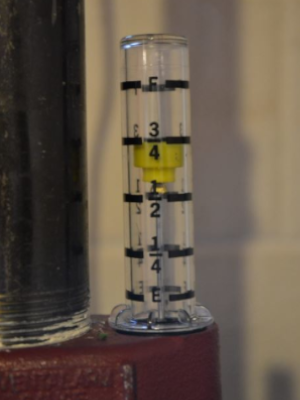
Now that it’s getting to the end of summer, it’s a good time to fill your oil tank. Making sure that you have a full tank of oil will be very helpful when winter comes. Filling up your tank of heating oil will make sure your tank is ready to go when the temperatures start dropping! If you’re getting low now or are sitting at around half a tank, now’s a good time as any to order oil. It’s always a good idea to go into heating oil season with a full tank!

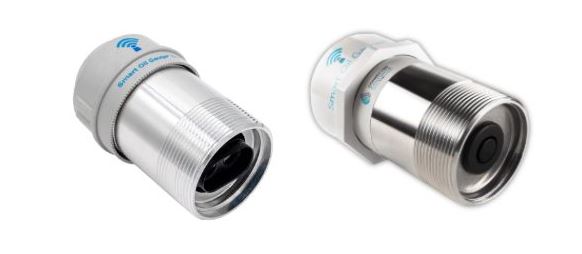
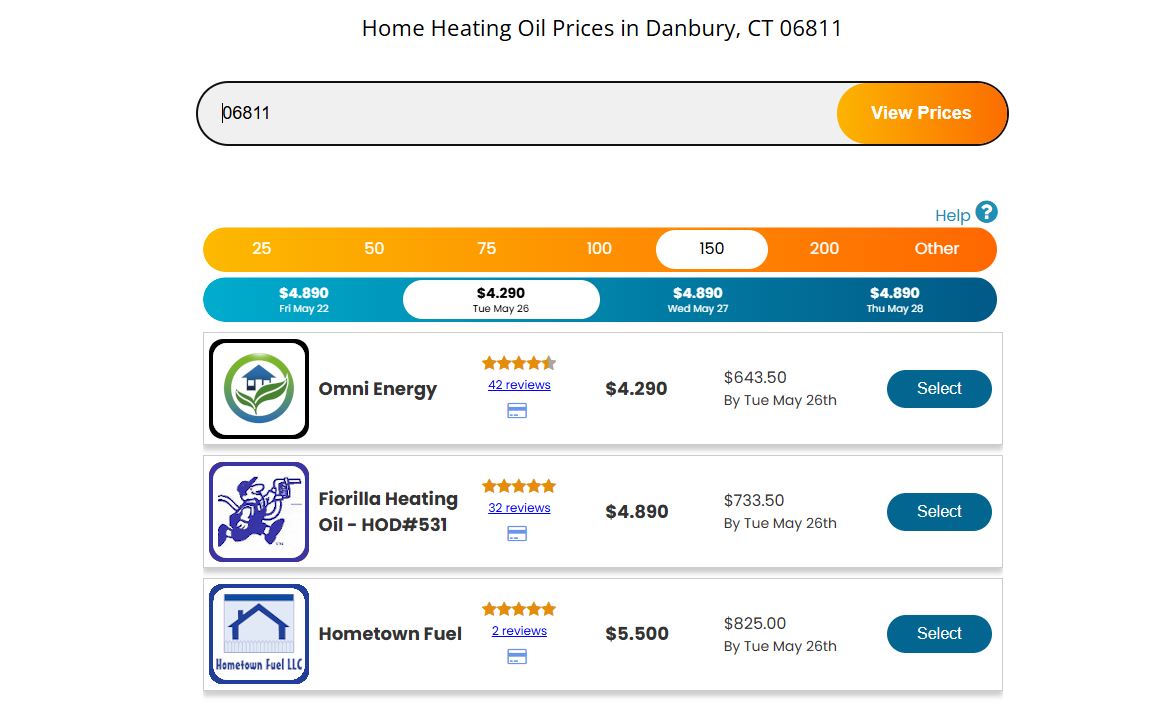
Your tank gauge is another important tool for you when it comes to monitoring heating oil usage and level. Most tanks come with a float gauge. However, the Smart Oil Gauge is another useful tool to track your data. You’ll have access to everything that you need at the touch of your fingers! You’ll even be able to order oil with our FuelSnap integration. FuelSnap lets you get the best selection of dealers and prices in your area!

Getting a fill-up now of all times is a great idea! This’ll make sure that you’re all ready for heating oil season!

Closing Thoughts

There are plenty of things that you need to do before heating oil season arrives. If you have the above-mentioned available to you, you’ll be fully prepared for the winter! Make sure you’re prepared when going into heating oil season and winter! You won’t want to be blind sided by a snowstorm or cold weather and not be prepared. If you’ve got a wood-burning stove or fireplace, stock up on firewood. If you’ve got a heating oil system, make sure that you get your tank filled and your system serviced!

As temperatures get lower and lower, we’re going to slowly start turning on our systems. Winter is around the corner, which means we’ll need to be warm for the cold months to come! Do not be un-prepared for what’s to come!

Happy Heating!

Hunter
How Long Will Five Gallons of Heating Oil Last?

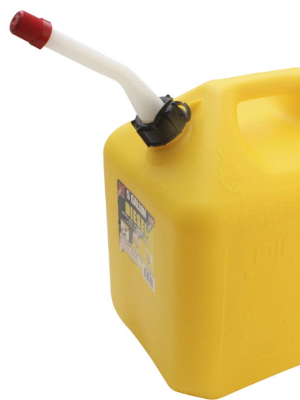
diesel can

During the colder months, you’ll know how important heating oil is. It has a variety of different uses. But, the most common use is for heating your home. You will need to purchase heating oil. But this begs the question, “How long will 5 gallons of heating oil last me?”

If you are running low on oil, stopping at your nearby gas station and buying a few gallons of diesel is a good temporary alternative until you get your delivery. However, this should be done sparingly because diesel is not a permenant solution.

There are a lot of different variables that can determine the answer to that question. During the winter months, 5 gallons of heating oil might not even last you a day. While during the summer, 5 gallons of oil, could last you a few days. It’s still important to ask yourself the following questions to ensure that you do not run out of heating oil.

            What do you use heating oil for?

            What size house do you have?

            Does your home have proper insulation?

            Do you have any drafty areas of the house?

            How warm do you like to keep your house?

            What is the weather and temperature like outside?

            What’s the condition of your boiler?

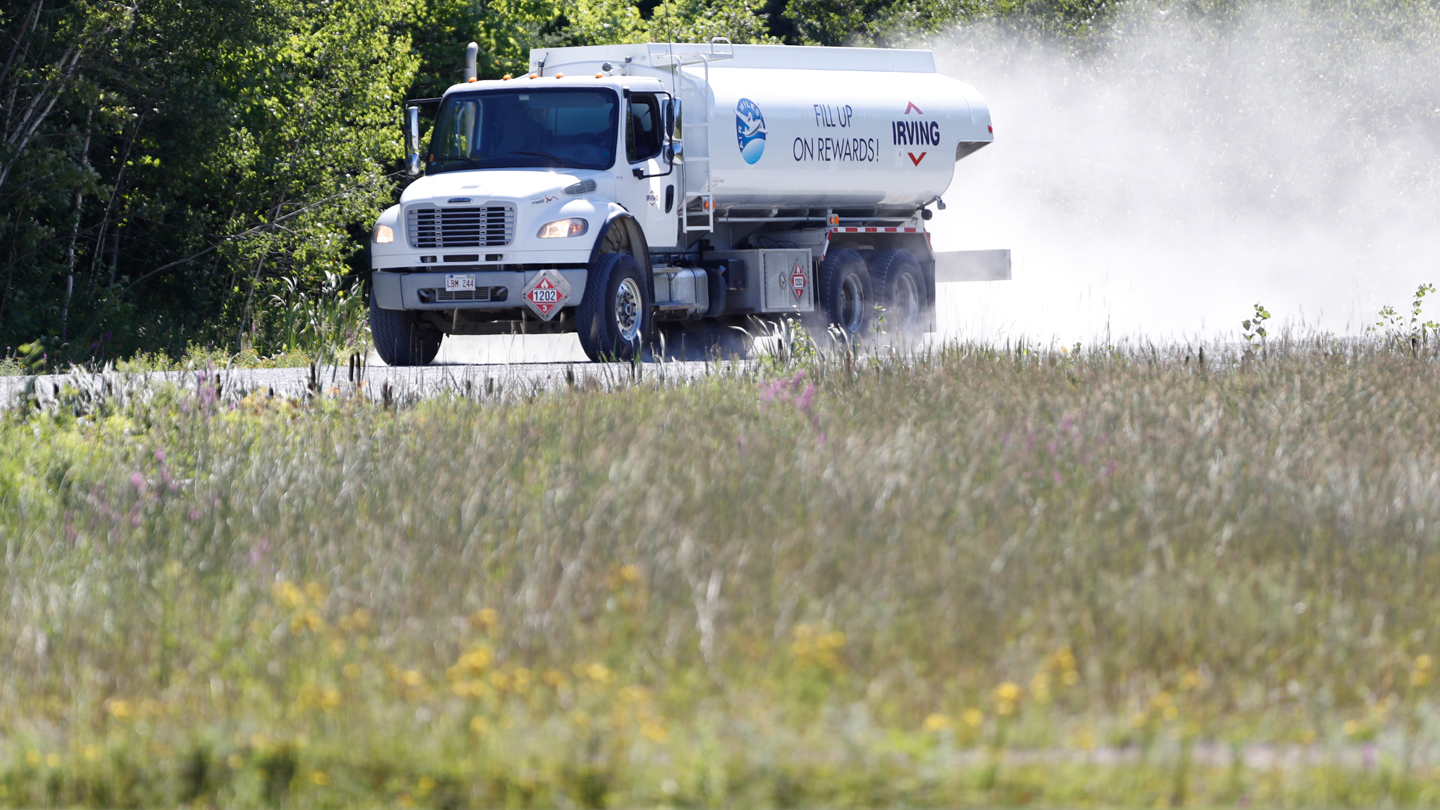
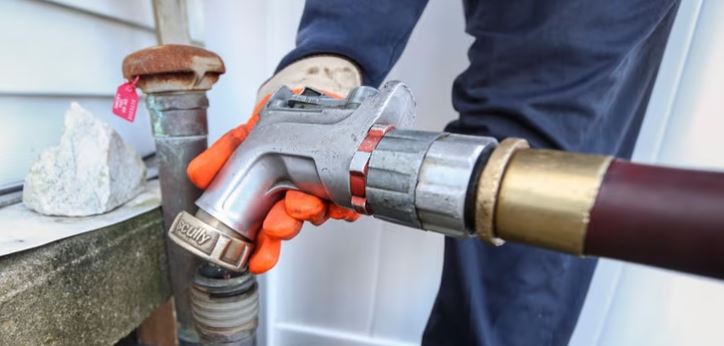
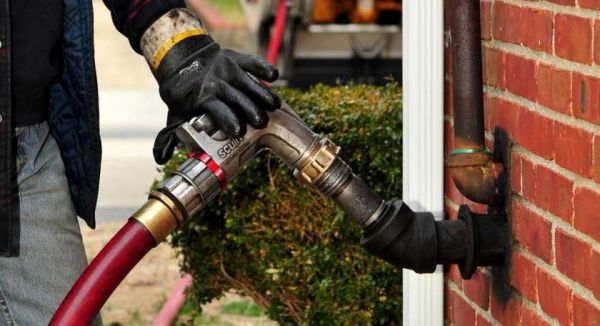
Home heating oil is delivered directly to a fill pipe on the side of a home.

Increasing Insulation

Insolation is a key factor in oil consumption. Insolation retains heat and keeps your house warm. Ensuring that your house has proper insolation, will help you get the most out of the heating oil you’ve purchased. With the correct amount of insolation, you’ll be able to maintain the heat that your boiler is producing for longer, reducing oil consumption.

Seal Up Drafty Windows to Reduce Oil Consumption

It might sound odd, but the types of windows that you have can affect your oil consumption. When your boiler burns oil, heat will spread throughout your house. As the heat spreads throughout the house, it will escape through the drafty windows. As a result, you will start to burn more oil. This can lead to higher-than-normal oil consumption which will quickly deplete the oil in your tank. However, if you have newer double-paned windows, the air becomes trapped between the two panes of glass. This is similar to insulation and will prevent the heat from escaping.

While that is a great solution, it isn’t cheap to replace windows. Using a thin plastic sheet, is a great way to seal up drafty windows. Apply the sheets to the window with double sided tame to make sure that they’re tight and secured. After the sheets are in place, go over it with a hairdryer to clean up any wrinkles. This will allow for another layer of insulation.

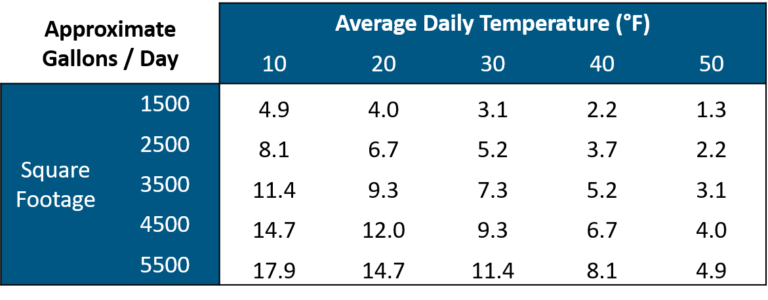
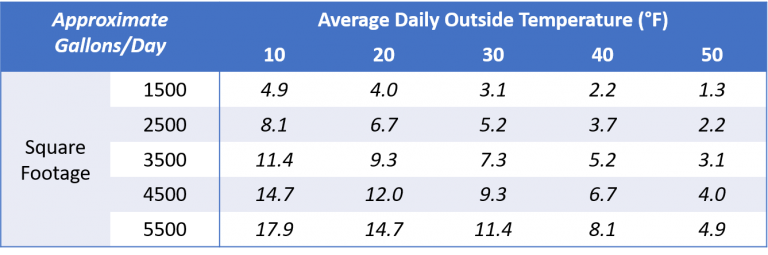
Heating oil consumption depends on outside temperature. A 2500 square foot home will use approximately 4-7 gallons per day on a typical winter day in New England.

Heating Your Home With Heating Oil

During the colder months of the year, where heating oil is most sought after, you will often be burning more oil than you would during the warmer months. This is because, as you are heating your house, the cold air outside is continuously drawing the heat outside through your walls. When this happens, your boiler will work harder to keep the house warm. This often results in an increased consumption of oil.

When heating up your home, your daily consumption will change depending on both the size of your home, as well as the outside temperature. During a warmer day during winter, you might at most use only around 2 gallons. While during the summer months, you might be even using less than half a gallon a day!

How Does Outside Temperature Affect My Heating Oil Usage?

In the state of Connecticut, the outside temperature can average anywhere from 30-35 degrees Fahrenheit. For the average sized home of 2000 square feet, the average consumption of oil is anywhere from 5-6 gallons of heating oil daily. Outside temperature is a huge contributor for increased oil consumption. It greatly impacts how much oil you are burning on a daily basis.

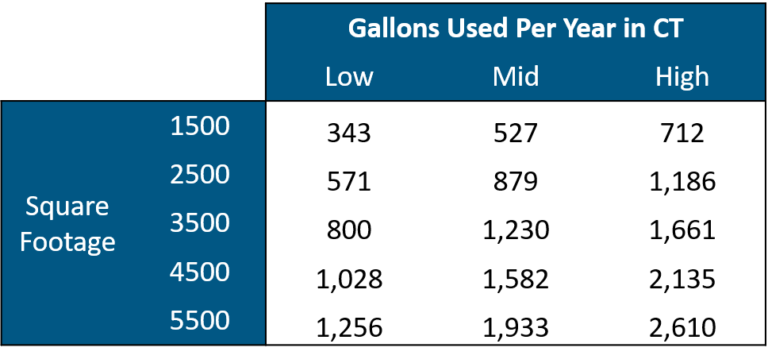
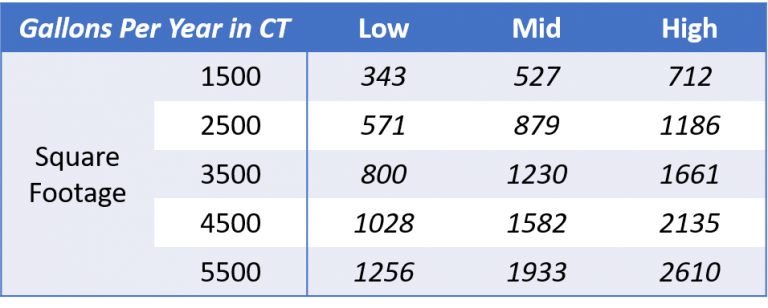
The typical house in CT will use about 880 gallons of heating oil per year.

Your graph will look different if you have an alternative form of heating. If you do, it is possible that you will be burning less oil and have a lower than the average home. But that begs the question, “How much oil am I burning in a year?”. Similar to the graph above, we have created a graph of estimated gallons burned per year in the state of Connecticut.

Program Your Thermostat to Reduce Oil Consumption

During the winter months, you’ve most likely heard your parents tell you, “Don’t touch the thermostat!”. The average home can get away with setting their thermostat to around 70 degrees Fahrenheit. This should be a decent temperature to remain comfortable in your home without needing to adjust the temperature of your thermostat.

You may be asking yourselves “Should I leave the heat on while I am not home?”. This could greatly effect the amount of oil you’re burning if you decide to do so. If you have a boiler with radiators in your house, then it can take some time for the temperature in the house to raise several degrees. By doing so, you might actually burn more oil at the end of the day, if you decide to keep your heat on when you aren’t home. However, your home might a have a furnace with air ducts scattered around the house. That is an example of “Forced Hot Air”. If you have any pets at home, you will likely want to keep the heat on, to keep them warm.

If you own a Smart Oil Gauge, you will be able to keep an eye on your hourly oil usage while you are not home. It is a fantastic tool that will help notify you if your usage is too high. This applies the same if you are home and just want to monitor your usage to see if you’re burning an excess amount of oil.

Maintaining a constant supply of heating oil means staying warm on cold winter days.

Is Your Boiler, Burner or Furnace Running in Top Shape?

A well insulated home won’t do you any good if your furnace isn’t running properly. It is very important that you have your system checked and adjusted to ensure that it is running as efficiently as it can. An average oil burner will last around 30 years, sometimes even more. As the years go by and the systems get older, you might end up using more oil than the previous year if not properly maintained. Even buying a new heating oil system can help decrease the amount of oil you are burning. However, we recommend getting your .


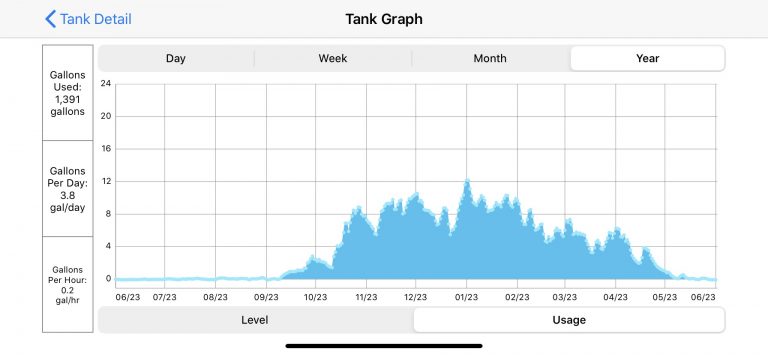
Every bit of information we have provided should provide you with a good idea of how long 5 gallons of heating oil will last you. But, the best way to see how long it will last you is to accurately measure it! The best way to do that is with the Smart Oil Gauge! The Smart Oil Gauge will send soundwaves down to the oil level that then bounce off of the oil’s surface and back up to the sensor! This ensures precise accuracy on what your oil level is sitting at, at the current moment! You’ll even be able to check oil consumption by day, week, month and year! In the photo below, you can see what the average usage will look like during the winter and during the summer!

A Smart Oil Gauge will allow you to closely monitor your heating oil consumption throughout the day.

The Smart Oil Gauge will be a worthwhile investment to keep track of how much oil you have and to ensure that you are getting the most out of your heating oil! It will also help to make sure that you will not run out of oil or get low on oil so that you won’t run out of oil! The gauge will also help you see the changes you’ve made using the tips described in this article.

Happy Heating,

Hunter