
Happy New Year, Smart Oil Gauge users! We’re in peak heating oil season right now, and heating oil is on everyone’s mind. So you might be asking, “How much oil should I order?” or “How much is oil in my area?”. So in this blog post, I’ll be covering everything that you need to know!
But, please keep in mind that if you run out of oil, it’s VERY important to order oil ASAP. If you run out, then place an order for a dealer to come out and deliver immediately! A system that has no oil in it for a prolonged period of time can be problematic. Afterwards, go to the gas station and get about 5-10 gallons of diesel. This will hold you over for at least a day or two until your order comes. If you suspect that you’re out of oil, use this article here as a reference on what to do.

What Factors Will Impact your Consumption?
There are plenty of factors as to what affects your consumption. However, the most important ones to know are listed below:
- The Temperature Outside: This is important because what the temperature is outside will determine how much oil you’re going to burn. The colder it is outside, the more oil you’ll burn.
- The Temperature Inside: Whatever you decide to set your thermostat to will affect how much oil your system is burning. Most of the time, setting it to around 70 degrees will give you the optimal temperature. It’s good to know that the higher you set your internal temperature, the more oil you’ll burn.
- Home Size: The bigger your home, the more oil your system will burn. Your system is going to burn more oil to heat more surface area in the home. For example a two story home will burn more oil than a single story home would.
- Insulation: Your home’s insulation is essential. If you’ve got good insulation in your home, then you’re likley to burn less oil. This is because a home that’s well insulated will have an easier time retaining heat. Some doors and windows might be drafty, so it’s important to make sure that they’re covered up!
- How Old Your System Is: The older your system is, the less efficient it becomes. This is due to aging and the older your system is, the less efficient and effective it becomes. A newer system will always be more efficient than a system that’s 30-years old.
- What You Use Heating Oil For: This is important when determining your usage. If your using it for just heat and hot water, then you’ll be burning it faster than someone who uses it for just heat or hot water.
The Size of Your Home and Usage
I’ll be keeping this part simple, because it’s important to understand this and it can get a little confusing. So, we’ll be focusing on just two very important aspects of your system. Those being your home’s size and your usage. In the below chart, you’ll want to find the size that your home roughly is. Using this chart will be able to give you an idea of where your usage stands when compared to other homes of different sizes.
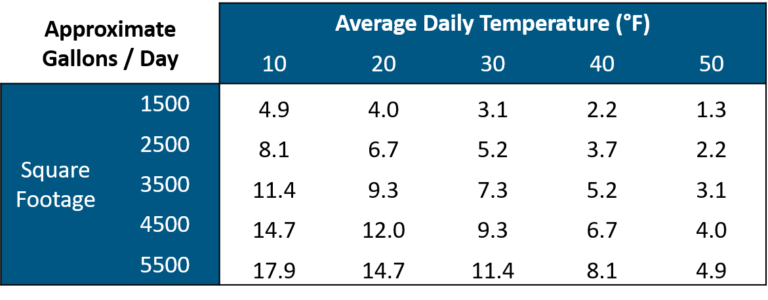
Now keep in mind that this chart is only really useful for the colder winter months. During the summer months, you’ll be burning significantly less oil which will result in lower overall usage for your home.
The average winter day in Connecticut will often have you seeing about 5-7 gallons per day in usage. Be sure to use this baseline as a guideline when you schedule your delivery.
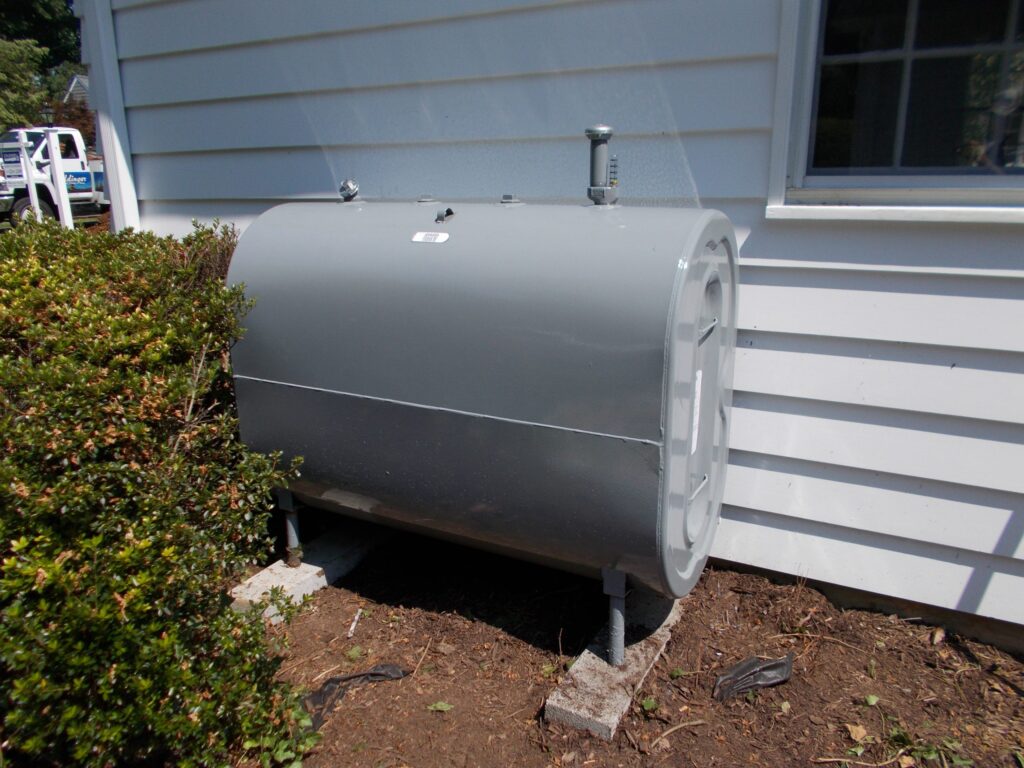
Another important bit of information to know is your tank capacity. Most tanks will never be filled to maximum capacity. This is to allow airflow, prevent leaks and avoid overfilling. For example, if you have a 275 gallon tank, the driver will keep pumping until they hear the vent alarm stop. On tanks of that size, that’s usually around 250 gallons. With a usage of roughly 5 gallons per day, you’re looking at around 40 days of usage.
Yearly Usage
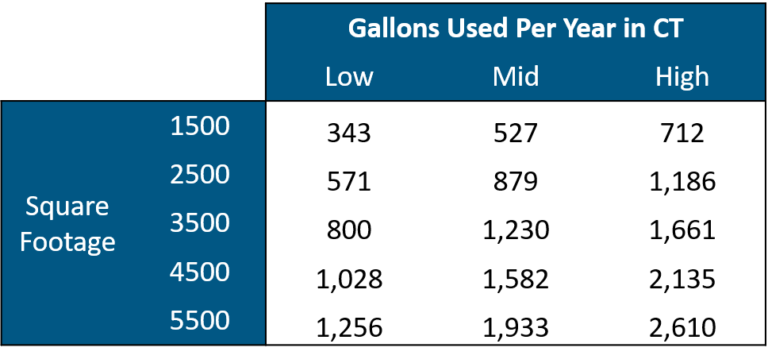
The winter months are usually the most common days throughout the year when you’ll find yourself using heating oil. However, some home owners will be burning it year round! If it’s not being used for heat during the summer, then it’s likley being used for hot water. But, you’ll only ever be burning .5-.8 gallons per day for just hot water.
When using oil during the winter months, you’ll have to refer to the above mentioned factors as to what contributes to your usage.
How Do you Track Your Consumption?
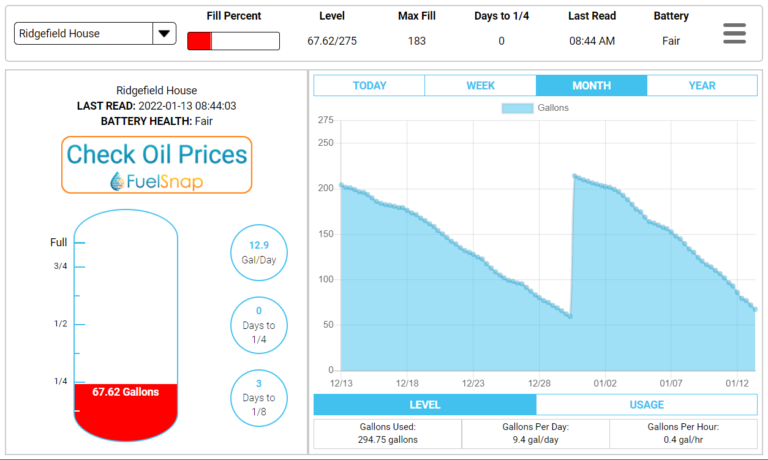
There a lot of different ways to track your usage. But the most popular and the way we recommend is by using a Smart Oil Gauge. It uses an ultrasonic sensor and is accurate from 0-72 inches. The gauge requires a 2.4ghz WIFI connection and a stable WIFI connection that will help the device have a solid signal to connect and upload to our servers using the router. The gauge will report all level and usage to data to the app. This data is compiled into four sections, being day, week, month and year! You can also export your data if you wish to do so!
Check Your Tank Regularly throughout the Winter
Using the above tips and tricks, you should now be equipped to be able to monitor and track your heating oil usage! But that being said, you should definitely keep track of your oil level on occasion. You can monitor your tank’s level using a Standard Float Gauge or a Smart Oil Gauge. If you’re unsure how to read the float gauge, take a look at this blog post here. I go over exactly how you read your gauge and what you need to know! But it’s important that you check regular to prevent run out! Running out of oil can lead to the feedlines getting clogged with sludge. Setting a reminder in your phone every week is the best way to remind you to check your level!
Happy Heating,
Hunter