
To use heating oil in your home, you’ll have to get a delivery of it. But, you might be wondering how the tank filling process goes and how they fill your tank. Especially with a majority of home heating oil tanks being indoors, how does it get into the tank? Some of these tanks are even installed in really hard-to-access places, such as your crawl space.
Well, the nice thing is that dealers can fill your tank without even setting foot into your home! But how exactly does this work? This is all because the tank installed in your home has both a vent and fill pipe. These are essential for when it’s time to get a fill-up! These pipes are always located outside of your home. But the place as to where exactly they are located depends on your home and where the tank is. Each home is different after all!
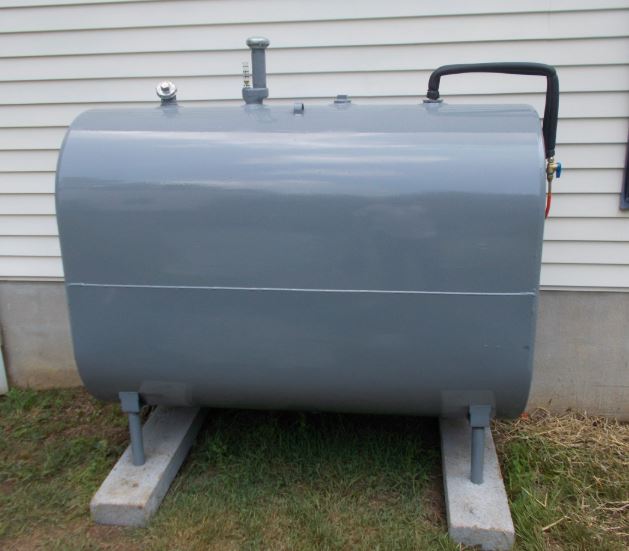
In this blog post, I’ll be covering all the different steps of the delivery process and how exactly it works!
The Components of your Tank
There are plenty of different styles of heating oil tanks. Some are larger, while others are smaller. But the interworking components of the tank will often be the same. The locations where these tanks are installed is usually the same as well. Either being indoors or outdoors. However, there are some rare instances where the tank is underground. If your tank is underground, I highly recommend removing it. I cover why exactly in this article here.
The fill and the vent pipes are some of the most important components when it comes to getting your tank fill-up. They extend from the top of your tank and will usually lead outside. These pipes have two different caps so that it’s easier for the driver to distinguish the difference between the two. The fill pipe has an unscrew able cap when compared to the vent cap that has a more rounded look to it, kind of like a mushroom cap.
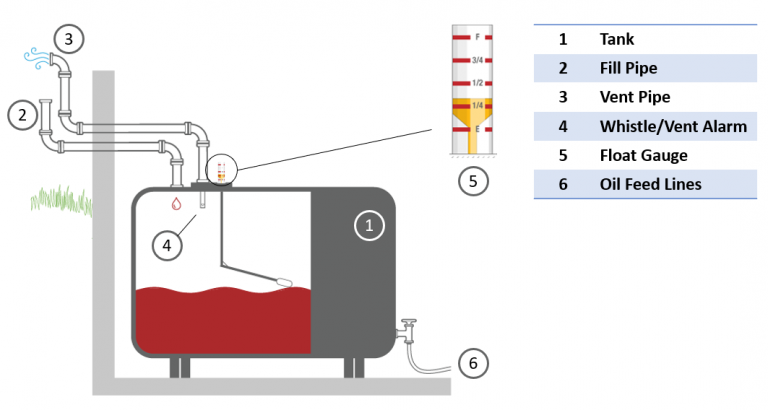
Another important component of your tank is the vent alarm or whistle. When the driver is filling your tank, the whistle will emit a loud whistling sound. That sound will alert the driver when it’s time to stop pumping oil in the tank. When the whistle stops making that sound, this means that the tank is full. It’s important to note that the dealer will not deliver to you if your tank’s vent alarm isn’t working.
How Many Gallons Should You Order?
The most important part of the delivery process is how many gallons that are going to be in your oil delivery. The dealer won’t be able to make the delivery without knowing how many gallons that they’ll be delivering. Plus, it’s nice to know exactly how many gallons oil you’ll be getting. Most of the time, you’ll end up ordering anywhere from 100-200 gallons of heating oil per delivery. However, this isn’t always the case if you’ve run out and need a fill up. If that’s the case, depending on your tank size the fill up could be vastly different. The driver will pump oil into your tank until they hear the whistle stop.
But how do you know how many gallons you’ll need to order and how many are in your tank? Well with the use of a tank gauge like the Smart Oil Gauge, you’ll be able to monitor your usage and get up to data readings of how many gallons are in your tank! Plus, you can even order oil through the app using our FuelSnap program.
Fill Pipe and Hose Connection
After the dealer receives your delivery ticket, they will know how many gallons they will need to deliver to you. They will schedule a time to come out and deliver your order to your home. When they arrive at your home, the driver will look for the fill pipe, which is located outside the home. If you know where it is, be sure to provide instructions on the order to where it is.
After locating the fill pipe, they will unscrew the cap and connect it to the truck’s hose. The driver will then go over to the truck and begin pumping oil into the tank. If your driveway is smaller, then the driver might park the truck on the street. But if your driveway is big enough, they will usually back up into your driveway for easy access to the fill pipe.
Pumping Oil Into the Tank
Once the driver finds the fill pipe, they’ll start pumping oil into the tank. For the driver to be able to start the flow of heating oil, the driver flips the nozzle of the hose, which allows heating oil to flow into your tank. But, they’ll usually only open the nozzle slightly to be able to properly hear the vent alarm. Otherwise, heating oil will start gushing into the tank! They do this to ensure that they’re not putting too much oil into the tank. Oil trucks can pump out a gallon of heating oil a second! So it’s important that they’re careful and pay attention!
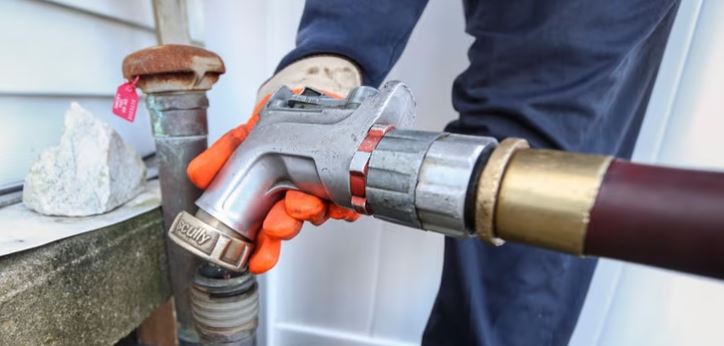
The driver will then start listening for the whistle. When the whistle stops blowing, the dealer will stop pumping oil into the tank. The trucks are metered, so when the delivery begins to reach your requested amount, the driver will stop pumping oil into the tank.
In the event of ordering a fill-up, the driver will keep filling the tank until they hear the whistle stop. This becomes a good indication that the tank has been filled and that the tank doesn’t require to be filled anymore.
The Order Slip
After the driver finishes the delivery, they will remove the nozzle of the hose from the fill pipe. Then, the driver will put the hose back into the truck. They will then begin preparing the delivery slip.
The order slip/delivery ticket, will now tell you various bits of important information. This will typically be the amount of oil that was delivered, the price per gallon, the amount ordered and sometimes how many gallons were already in the tank. Although, that tends to be pretty uncommon. This delivery slip is very useful especially during times where the tank wasn’t able to fit the requested amount. This gives an idea on the adjusted price and how much will be refunded to you.
Underground Tanks
In today’s day and age, these tanks tend to be very uncommon. But that doesn’t mean that these tanks don’t exist. These tanks are vastly different from above ground tanks, however, that can make deliveries a little bit more complicated. Unlike all above-ground tanks, there is no vent alarm on underground tanks. So oil companies will often have to stick-measure the tank first before making the delivery, and periodically stop the check and make sure that they aren’t over-filling the tank.
After the first stick measurement, the dealer will put roughly 100 gallons of oil into the tank before stopping. The driver will then go back over to the tank and stick measure it once again. Then, comparing it to the first reading, the driver will see if there’s a chance anymore oil can be put into the tank. If the tank can fit more oil, he’ll continue pumping. Otherwise, the driver stops filling the tank.
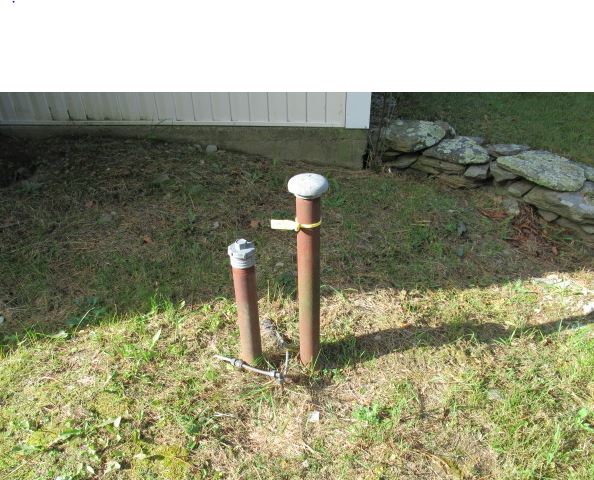
However, on rare occasions, some drivers will carry around a special vent that’s designed to sit onto of the fill pipe. This special vent extends down to the tank underground to be able to determine when the driver needs to stop filling. Once the specialty vent threads into the fill pipe, the driver will know when they need to stop pumping.
Closing Thoughts
The process for an oil delivery is very straightforward. After placing the order, the dealer will come out and deliver your requested amount of oil into the tank. After making the delivery, the driver will go to the truck and will print out a delivery slip that has all the information regarding this delivery. Afterwards, you’ll know exactly how many gallons were delivered and at what price. If you’re on automatic delivery the driver will tell you exactly when they’ll be back out to deliver your next delivery. Otherwise, feel free to place another order once your tank level reaches one quarter.
If you’re curious about how the process goes visually, then feel free to ask the driver if you can watch! Most drivers are very friendly and will be happy to show you exactly what happens when they deliver the oil!
Happy Heating,
Hunter