
On heating oil tanks, there are a couple of different ways to monitor your fuel, mostly through a variety of fuel gauges that are installed on the tank. However, there are some more traditional ways to keep track of your heating oil level. While heating oil gauges are the primary way to monitor your level, dipsticks are also common as well. In this article, I’ll be covering all the different ways to monitor your fuel oil level!
Float Gauges
These types of gauges are the most common that you’ll see. They are typically mounted on most steel tanks. They function with a metal arm that tends to move up and down inside the tank. At the end of this arm is a little cork bobber. This bobber floats on the top of the oil level. The end of the arm connects to a plastic cylinder with a colorful disc on the top of the tank. The disc will line up with marks to indicate the level of the oil. This tends to range from full, 3/4, 1/2, empty, and more!
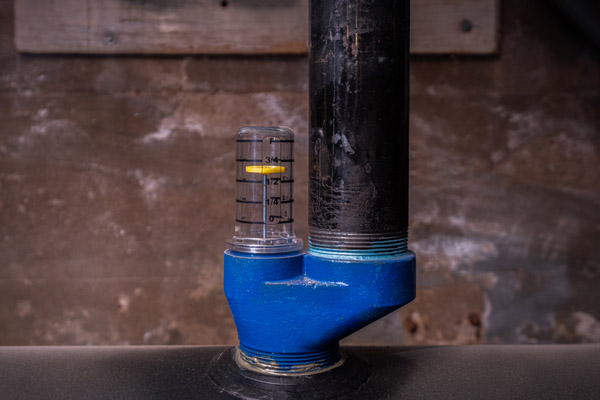
However, these gauges do have one flaw. That tends to be the arm and float itself. As the gauge itself gets older, the bobber can get covered in sludge and oil. This sludge and oil can cause the float to get coated in sludge, which will cause the float gauge to be less accurate over time. This arm can also break and occasionally get caught on the side of the tank, which can make it stuck.
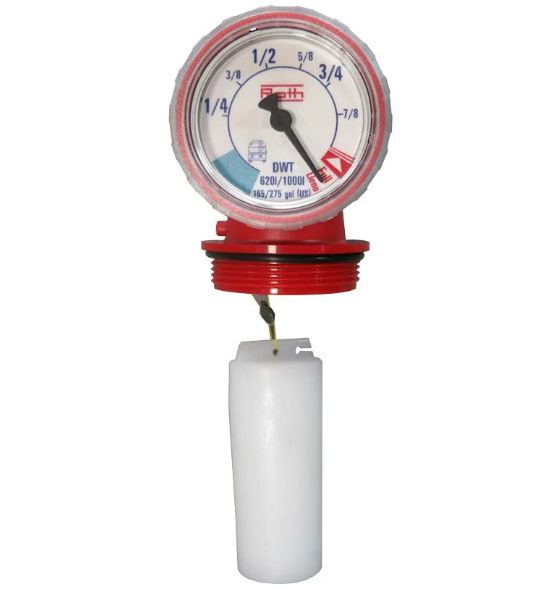
Roth tanks have a float gauge similar to the standard. However, theirs tends to look like a meter with a string and a plastic bobber on the end. Where the plastic bobber sits will determine where the float’s needle points to determine the oil level.
Smart Oil Gauge
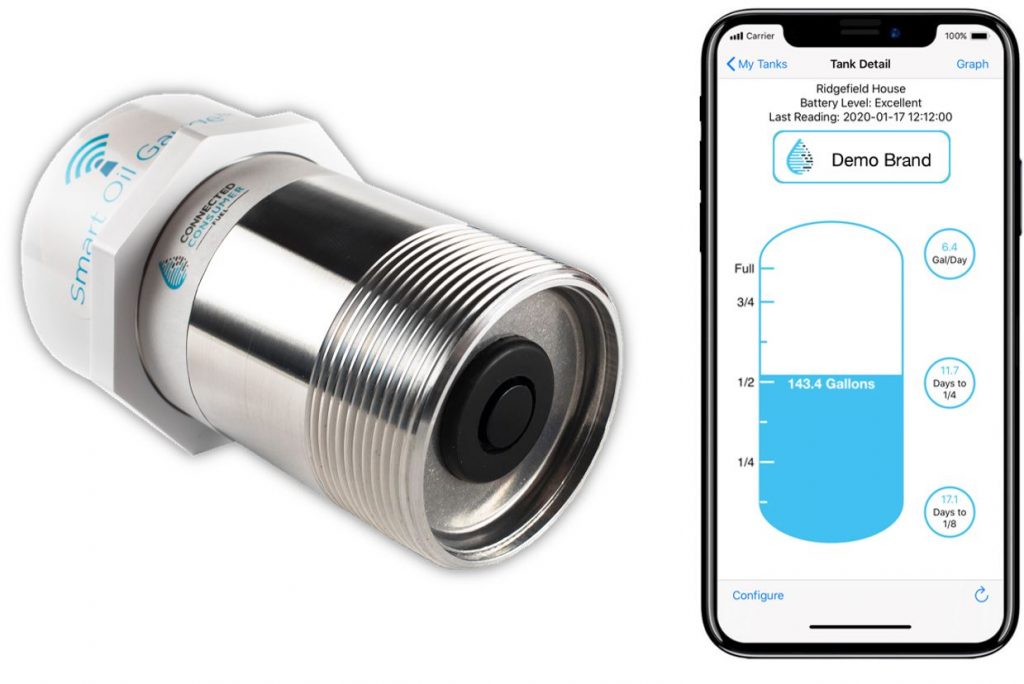
Another type of gauge that can read your level is the Smart Oil Gauge! This gauge is a wireless tank monitor that will keep track of your usage data and your tank level! All you need is a stable WIFI connection for the gauge to work! This gauge works off of a 2.4ghz WIFI connection and uses an ultrasonic signal to determine how much oil is in the tank!
The Smart Oil Gauge comes in two different models. There’s the standard Smart Oil Gauge and the Duo Smart Oil Gauge! The Duo is more accurate and is a dual-sensor device. The dual-sensor structure gives it a larger operating range of 0-72″. This gauge can be used on almost any tank. So long as it doesn’t have a raised fitting or a 1.25″ NPT fitting. The Standard Smart Oil Gauge is only a single sensor device and has an operating range of 8″-72″. This means that the sensor has a little bit of sensitivity at the top of the tank when it’s full. But the standard model can be installed on tanks with fittings of 1.25″ NPT. You can read about all the differences between the two here.
Stick Measurements
Using a stick to measure your tank is uncommon nowadays. But it’s not completely unheard of! While it’s not a heating oil gauge, using a stick for measuring oil level is a requirement on underground tanks. Unlike standard above-ground tanks, underground tanks can’t have a float gauge or a Smart Oil Gauge installed on them. This is because the pipes that stick up out of the ground are too tall, which will prevent the float gauge and the Smart Oil Gauge from reading correctly!
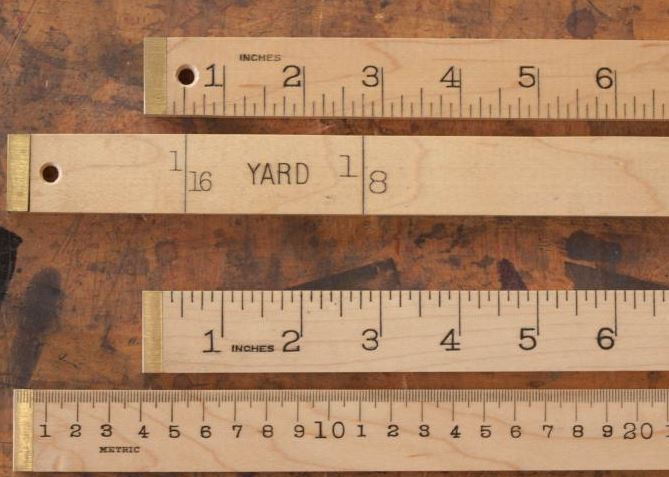
On underground tanks, the best thing to do is to use a stick measurement. This can be either a yardstick or a tape measure. This will help you get an idea of how much oil is in the tank itself. Sticking these tanks will also help you plan to order oil accordingly, depending on what the stick measurement reads.
Conclusion
There are a multitude of different ways to monitor your heating oil level! While the Smart Oil Gauge gives you usage data as well, float gauges and sticking the tanks are still reliable! The nice thing about the Smart Oil Gauge is that you can use it alongside the float gauge! You’ll be able to monitor your level with the classic float gauge and have the level and usage data at the tip of your fingertips!
While you cannot use heating oil gauges on underground tanks, in dire situations, you can use the stick to measure the level of oil in the standard tank. If the Smart Oil Gauge is offline or the float is broken, you can always stick to measuring the tank to get an idea of how much oil is in the tank, so that you know when to order!
Happy Heating!
Hunter