
Homeowners in the Northeast will know that you have to get your heating oil tank filled often. But what’s the process actually like? Most of the heating oil tanks on the East Coast are indoor installations, while some are outside. But some of these indoor tanks are in hard-to-reach places, such as crawl spaces or cluttered basements. Because of this, you might be wondering how the driver is able to complete your heating oil delivery without even setting foot in your house! To do this, your tank must have a fill pipe and a vent pipe! These are requirements for all heating oil tanks and are crucial for the fill-up process. In this blog, I’ll be covering the process step by step, and what you should expect!
Components of the Tank
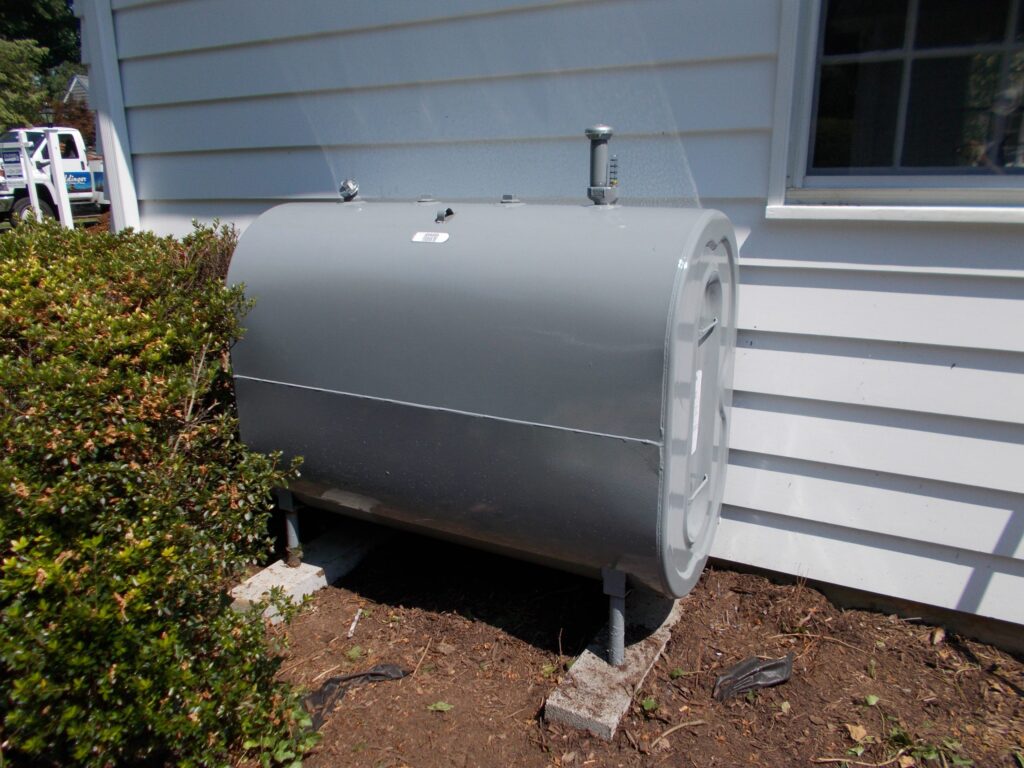
Nowadays, heating oil tanks come in many different shapes and sizes. However, the most common tank size is the Granby 275-gallon tank. Most homeowners will have this type of tank. It’s typically installed in your garage or basement, and it tends to have a rounded oval shape. However, while this is the most common, that doesn’t mean it’s the only size tank you’ll see! Roth tanks are very popular and will range in size as well. There are even some homes that still have underground tanks! However, I strongly advise you to get that removed if you do! These tanks can become environmental hazards once they are more than 30 years old!
When it comes to heating oil tanks, all of them come with a vent pipe and a fill pipe. Indoor tanks will have these pipes come out of the tank and lead outside. Their pipes rest outside, typically on the side of the house. However, on outdoor tanks, they tend to stick out of the top. The fill pipe is how the driver connects the tank to the truck’s pump. This is how oil is put into the tank from the truck. The vent pipe is required for filling up the tank. Sometimes, you can take them off the tanks. DO NOT TAKE THEM OFF THE TANK. These vents allow air to flow out of the tank to prevent pressure build-up and allow airflow.
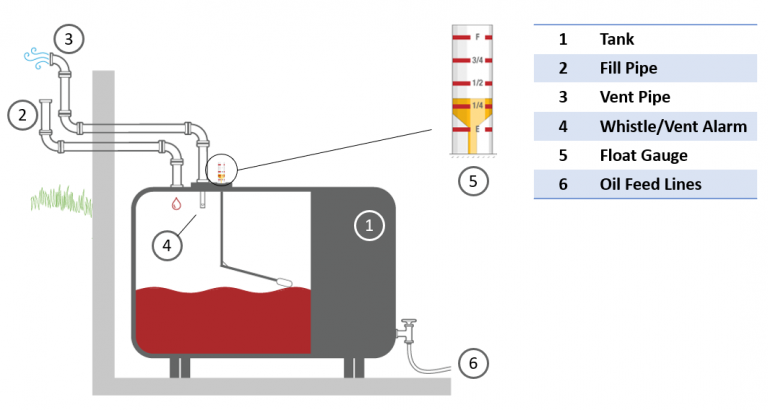
Finally, all tanks come with what’s known as a “vent alarm”. These are very important for the heating oil delivery process. These are kind of like whistles and will make a loud noise when the tank is filling up. When the whistle stops, the driver will know it’s time to stop pumping! This will help prevent the driver from overfilling the tank. If the vent alarm is broken or your tank doesn’t have one, the driver won’t deliver.
How Many Gallons Do you Need to Order?
Before the dealer can make the delivery, they need to know how much they’re delivering to you. How much you’ll want to order is completely up to you! Some customers like to know exactly how much oil they’re getting in a delivery and tend to order between 100 and 200 gallons of oil. On the other hand, some customers just want the tank filled up and will order a fill-up! Depending on your tank’s capacity, the amount of oil you get on a fill-up could be different. Additionally, it’s important to know that when it comes to a fill-up, dealers will typically leave the top couple of inches open for airflow and prevent overfilling.
When you’re ordering oil, you might be wondering how much is in your tank. If you have a float gauge, then you can see the gauge’s estimate of how much you have! However, a Smart Oil Gauge is another way for you to be able to know exactly how much oil is in your tank at any given time! This makes placing orders and scheduling your heating oil delivery so much easier because the gauge will tell you exactly what you want to know! If you want to know more, I go much more in-depth on the gauge here.
Connecting the Truck to your Tank
Once the oil company has your heating oil delivery scheduled, they’ll come out on the delivery date. Once they’re at your home, they will need to locate your fill pipe. It’s a good idea that during the process of placing the order, you leave a note with instructions for the driver to locate your fill pipe. This makes the delivery process much easier!
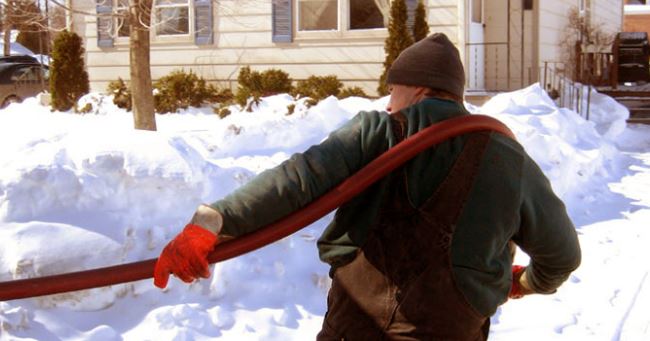
After the driver has found the fill pipe, they will unhook the hose from the truck and walk it over to the fill pipe. But be aware that if your driveway is either small or narrow, the driver might park on the street! However, they should have no problem completing the delivery!
Oil Pumps into Your Tank
After the driver finds the fill pipe, they will start the flow of oil from the truck into your tank. However, to do this, they flip a switch on the truck that starts the flow of oil. When they do this, though, they’ll only open it slightly. They’ll do this so that the oil doesn’t come rushing out, and they can listen to the vent alarm. This helps them not overfill the tank and can help them pay attention to how much oil they’re putting in their tank.
When the driver hears the whistle stop, that means that it’s time to stop pumping! The driver will turn off the pump, and oil will stop flowing. In the case of a customer ordering a specific amount of oil, say 100 gallons. The driver will stop filling once the truck’s gauge gets to what the user ordered!
The Delivery Ticket/Order Slip
After the driver has finished delivering your order, he’ll go to the truck with the hose. Before he does this, though, he will put your fill pipe’s cap back on. The driver will then go back to the truck and prepare your delivery slip.
The delivery slip will contain information about the delivery. Starting with when it took place, how much oil was delivered, and at what price. Occasionally, the delivery slip might even tell you how much oil was in the tank at the time of the delivery! Although this doesn’t happen very often.
Underground Tanks
Underground tanks are becoming rarer by the day! These tanks are constantly being removed. This is because, over time, they become a hazard to the environment. However, the way these tanks get a fill-up is slightly different. These tanks tend not to have a vent alarm. So the drivers can’t listen out for that when they’re filling up the tank. To ensure they’re not overfilling it, the driver will often stick-measure the tank with a yardstick. This gives the driver an idea of how much oil is in the tank before making the delivery. Using the measurement they got from the stick measurement, the driver can determine what a safe amount of oil to deliver is.
After getting an idea of how big the tank is, the driver will start pumping some oil into the tank. This tends to be around 100 gallons at first. Once the driver has pumped 100 gallons in, they’ll go over to the tank and stick it again to see how much room’s left in the tank. The driver will then use the stick measurements from before and after the 100 gallons to get an idea of what the capacity is. He’ll do this with the help of a tank chart.
On rare occasions, the driver will carry around a special vent that they temporarily attach to the tank’s pipes. This special vent will reach down to the inside of the tank, and oil will get pumped into the tank, and a whistle will sound!

Conclusion
Even if the driver cannot see the tank when they are delivering, there are a lot of tools that they can use to get an idea of when to stop pumping! The vent alarm is the primary way for the driver to know when to stop pumping. This is because once the oil covers the whistle, it’ll stop making that sound!
But if you want to watch the fill-up first hand, then feel free to ask the driver when he arrives! Most of these drivers are very friendly and knowledgeable about the process! They’d be happy to show you and answer any questions that you might have!
Happy Heating!
Hunter